


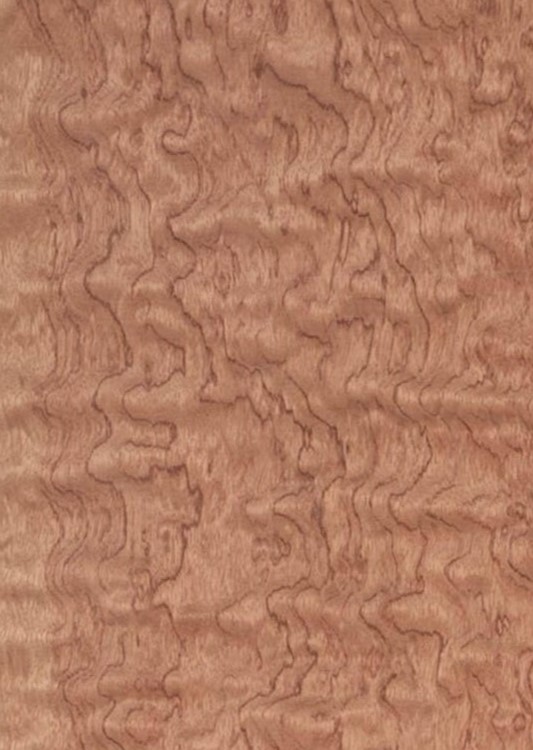
Quite large, though not giant bubinga trees (their height in adulthood exceeds 30 meters, and the diameter can reach almost two meters) have a columnar straight and flat trunk, free at 2/3 of the height from the branches. The tree often grows near rivers, lakes or swamps, as well as in periodically flooded forests. Although Bubing is called the “rose tree”, it is a metaphor rather than a reality. Pink-red colors of the core are observed only in freshly cut wood, and not often. Even at this time, thicker and richer tones from red-purple to dark burgundy wine hue (as in a good Cahors or Cabernet) predominate. Under the influence of time and processing (in particular, drying, which is not, as is often the case with exotic rocks, great complexity), the color only gets darker. Quite narrow sapwood of pale tone (cream, yellow and even greenish colors) is not used in production.
Botanical name – Guibourtia tessmanii
Distribution – Equatorial Africa